
How to Turn Study Meaning Into a Weekly Plan

study meaning is simple: it’s not “reading a chapter.” It’s doing focused work that changes what you can recall, explain, and apply. In this guide, I’ll show you how to turn study meaning into a realistic weekly plan you can actually follow, even when motivation drops and exams get close.
What “study meaning” looks like in real life (not vibes)
Study meaning, in daily life, is the difference between “I spent 2 hours” and “I can solve 15 questions without checking notes.” The output matters.
Here’s the rule we use when mentoring students: If you can’t test it, you didn’t study it. That doesn’t mean you need a full exam every day. It means you need a check: a mini quiz, a set of problems, a quick teach-back, or flashcards.
This is also backed by learning science. Practice testing and spaced repetition consistently beat re-reading for long-term memory. A solid summary of this comes from the American Psychological Association on retrieval practice. If your weekly plan doesn’t include retrieval, it will feel productive and still fail you later.
One more practical point: studying supports career prep too. Your “study week” should leave space for resume edits, mock interviews, and portfolio work because those are also performance skills, not passive reading.
How to set a measurable study goal (study meaning you can prove)

A measurable goal starts with a result you can show. A good goal is “score 70% on a timed quiz” or “finish 40 flashcards with 90% accuracy,” not “study chemistry.”
The easiest format is:
Topic + output + deadline + score/quality bar
Example: “Unit circle practice: finish 30 mixed questions by Thursday, 80% correct without notes.” Yes, I’m calling out unit circle practice because it’s a classic topic where students waste time rewriting notes instead of training recall.
If you’re not sure what output to choose, match it to the subject:
| Subject type | Best study output | What “done” looks like |
|---|---|---|
| Math, stats, physics | Practice sets + timed drills | You can solve problems from scratch |
| Theory-heavy (bio, history) | Flashcards + short teach-back | You can explain concepts without notes |
| Coding, design, labs | Build small artifacts | A working feature, a sketch, a lab write-up draft |
| Language | Speaking + writing reps | A recorded speaking run + corrected writing |
This is where a study planner helps, but only if you plan outputs, not just time blocks. If your planner only says “Study 7 to 9,” you’ll drift.
Also, be honest about your week. If you’re doing a work study program or part-time job, your plan needs fewer daily tasks and stronger review. Over-planning is the fastest way to quit by Wednesday. For official context on how work-study is structured, see the U.S. Department of Education overview of Federal Work-Study.
Quick note for admissions-minded students: “prospective students meaning” usually refers to someone considering applying to a college. But once you’re in, your weekly plan should be built around performance outputs, not status labels.
How to break chapters into daily tasks and review loops
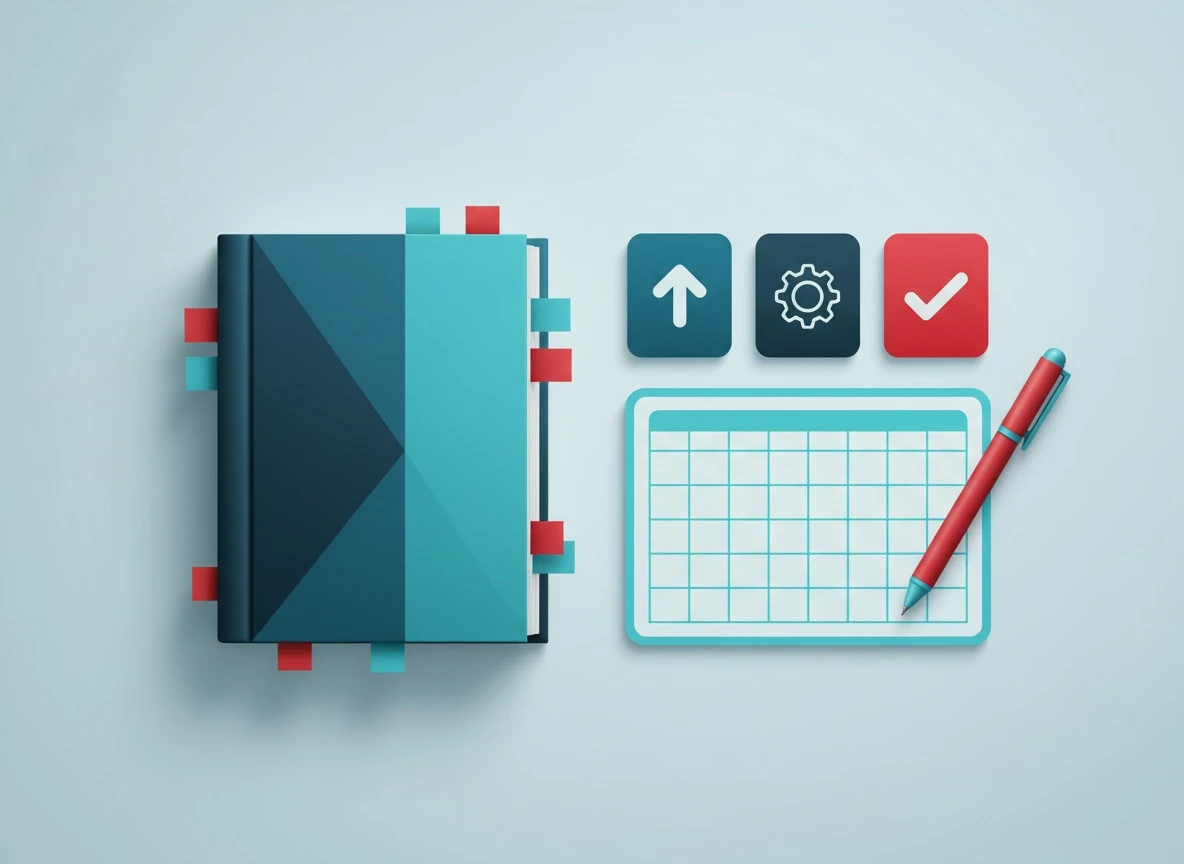
The weekly plan that works is boring in a good way: small daily tasks plus a review loop that stops forgetting.
Start by slicing a chapter into “chunks” that take 25 to 45 minutes each. A chunk is one concept set, not “Chapter 5.” Then attach a retrieval action.
Here’s a simple structure I’ve seen work for students across engineering, commerce, and arts:
The daily task formula
Each day’s study block should include:
- Learn (short): skim notes or watch one lecture segment
- Do (main): practice questions, flashcards, or a mini write-up
- Check (fast): self-quiz or explain out loud in 60 seconds
That’s it. If you only do “Learn,” you’re not studying. You’re consuming.
The review loop that saves your grades
Your review loop is where most students fail. They plan new chapters every day and never revisit.
A realistic loop looks like:
- Same-day quick review (5-10 minutes)
- 2-day review (10-20 minutes)
- Weekly review (30-60 minutes)
This is basically spaced repetition. If you want the science behind spacing, University of Washington Learning Center study strategies gives a clean, student-friendly explanation.
If you like studying with other people, a study buddy can make the review loop automatic. But set rules: you meet for 30 minutes, each person brings 10 questions, and you quiz each other. If it turns into gossip, it’s not a study session.
If you need a vibe boost, “study with me” videos can help you start, but they cannot replace the “Do” part. Use them like a timer, not a teacher.
How to track progress when motivation drops (and still show up)
Motivation drops for everyone. The difference is whether your plan has a tracking system that keeps you honest.
I like one simple metric: proof of work. Not hours. Proof.
Pick one:
- Number of practice questions attempted
- Flashcards reviewed with accuracy
- Pages summarized into a one-page sheet
- Timed quiz score
Then track it in the smallest place possible: notes app, a paper grid, or your planner. If you want a framework, think of it like plan do study act: plan the output, do the session, study your results (what you missed), act by fixing the weak area next session. That loop is basically the same logic used in continuous improvement, just applied to your brain.
When distractions are the issue, fix the environment before you blame yourself. I’ve watched students double their output by doing three boring changes: phone in another room, website blocker, and a 25-minute timer. Deep work is not a personality trait. It’s a setup.
Also, protect sleep. Memory consolidation is real. The National Institutes of Health on sleep and memory explains how sleep supports learning. If your weekly plan kills sleep, it will backfire.
If you want structure plus career prep in the same place, MentorWise AI bundles study support with job readiness tools like resume help and mock interviews. I built it for students who hate bouncing between ten different apps.
How to adjust your weekly plan before exams (without panic)
Your plan should change as exams get closer. If it doesn’t, you’ll either under-prepare or burn out.
Two weeks out, your goal shifts from “cover content” to “perform under exam conditions.” That means more timed practice, more error review, and less note-making.
Use this simple re-balance:
| Time to exam | Focus | What changes in your week |
|---|---|---|
| 3-4 weeks | Build understanding | More learning blocks, light quizzes |
| 2 weeks | Build speed + accuracy | More practice tests, stricter timing |
| 1 week | Reduce mistakes | Review wrong answers, targeted drills |
| Last 2-3 days | Stabilize | Light review, sleep, no new heavy topics |
Here’s the unpopular truth: Doing a full practice test and reviewing mistakes is worth more than rewriting an entire chapter. If you want a “study guide maker” approach, build one-page sheets only after you’ve tested yourself. Otherwise you’re making pretty notes as procrastination.
Group study can help right before exams, but only if it’s structured. Each person should bring their top 5 weak areas and you rotate teaching. Teaching forces clarity. If you can’t explain it, you don’t know it.
Also, keep life admin in the plan. If you’re applying for internships, schedule 1-2 short blocks for career tasks. Use a resource list like job search sites for students and freshers so you don’t waste an hour hunting random links.
If you’re also working on LinkedIn, be careful with spammy messages. We’ve seen students lose accounts or get scammed. This guide on how to handle “LinkedIn or Interpol” DMs is worth reading once so you don’t learn the hard way.
A realistic “study weekly” template you can copy (and personalize fast)
Study weekly planning fails when it ignores your real energy and your real timetable. So build it around anchors: classes, commute, job shifts, and sleep.
Here’s a template that works for most students without requiring a perfect life:
| Day | Main study block | Review block | Career block |
|---|---|---|---|
| Mon-Thu | 60-90 min after classes | 15 min before bed | 20-30 min (resume, LinkedIn, portfolio) |
| Fri | 45-60 min light session | 30 min weekly review | 0-20 min |
| Sat | 2 x 60 min deep work blocks | 30 min error review | 60 min internship search or mock interview |
| Sun | 60 min planning + catch-up | 30-45 min spaced review | 30 min networking or applications |
Keep breaks inside the plan. If you don’t schedule breaks, you’ll take them anyway, just with guilt.
If you need help coordinating school and career services, prepping for a counselor meeting can save you weeks. This checklist on how to prepare for a career center appointment shows what to bring and what to ask so you get real answers.
Frequently Asked Questions
How can I connect with students to study together? Start with one person, not a big group. Ask them to do one 30-minute session where you quiz each other using questions you already prepared, then decide if it’s a fit.
How do I write a simple resume while I’m still studying? Use a one-page format and lead with projects, coursework, and measurable outcomes. One strong project with numbers beats five vague bullet points.
How to put a focus on a resume? Pick one target role and tailor your top third to match it: headline, skills, and 2-3 proof points. If your resume tries to fit every role, recruiters read it as “no direction.”
How to be a top 1% student? Top students don’t study more, they study with feedback. They do timed practice, track mistakes, and revisit weak areas weekly instead of re-reading everything.
What is a study jam? A study jam is a short, structured group session focused on one topic and one output, like solving 20 problems or making 30 flashcards. The key is a clear goal and a timer so it doesn’t drift.
Studying gets easier when your plan is simple, measurable, and flexible. If you want an all-in-one place to build your weekly routine, improve LinkedIn, practice interviews, and find free internships and courses, message us through the MentorWise AI contact page. We actually reply: talk to the MentorWise AI founders.
Key Takeaways
- Write a measurable study goal using a clear output (practice questions, flashcards, summaries), not a vague time target.
- Build your week around short daily tasks plus a review loop so you stop forgetting what you studied.
- Track progress with one tiny metric and adjust your plan early, before exams force panic-mode.
Related articles
How to Handle “LinkedIn or Interpol” DMs
linkedin or interpol DMs can be scams or threats. Use this 2026 playbook to spot fakes fast, reply safely, lock privacy, and report.
How to Prepare for a Sentinel Career Center Appointment
sentinel career center prep guide: what to bring, what to ask, mock interview scripts, and a 2-week follow-up plan to get hired faster.